In 2022, the Société des traversiers du Québec (STQ) commissioned 3E Ing. to conduct a comprehensive arc flash study on the Saaremaa ferry. This ferry, which operates in the Quebec network, has complex electrical installations where the safety of maintenance and operating personnel is paramount. The main objective was to quantify the incident energies during arc flash faults and to define the required personal protective equipment (PPE) and safe distances.
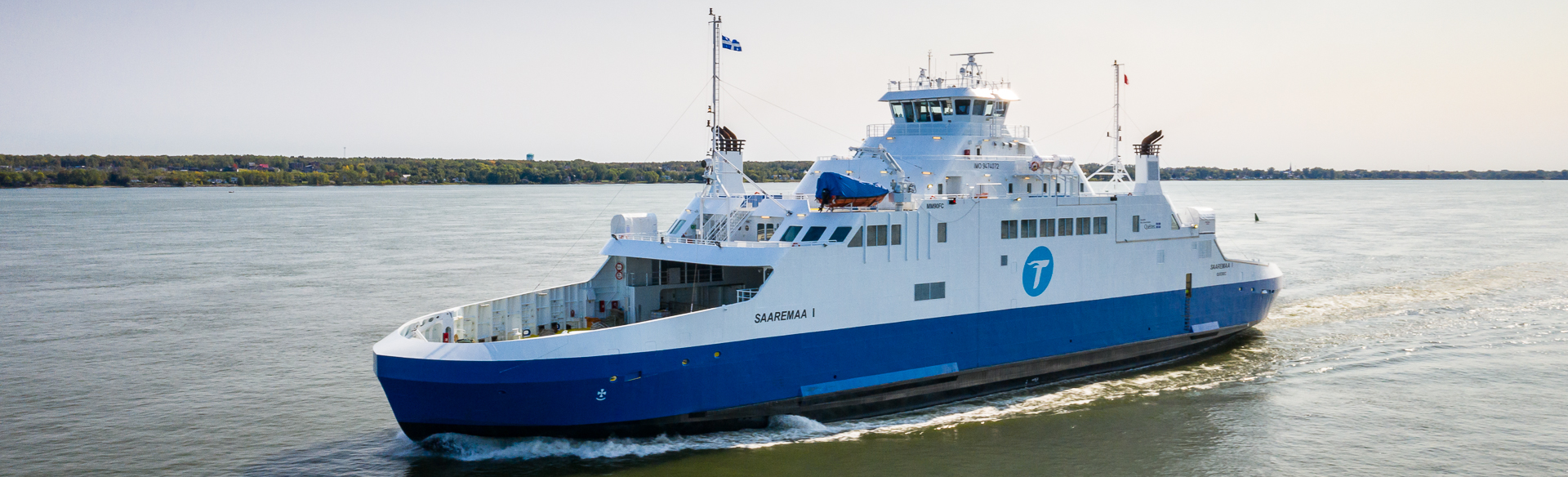
Arc flash for an STQ ship
Arc Flash Analysis on the Saaremaa Ferry
- Client
- Société des traversiers du Québec
- Year
- 2022
- Location
- Québec
Context
Objectives
- Identify arc flash hazards according to standard IEEE 1584.
- Determine the incident energy levels for the various electrical equipment on board.
- Establish PPE categories according to standard CSA Z462-18.
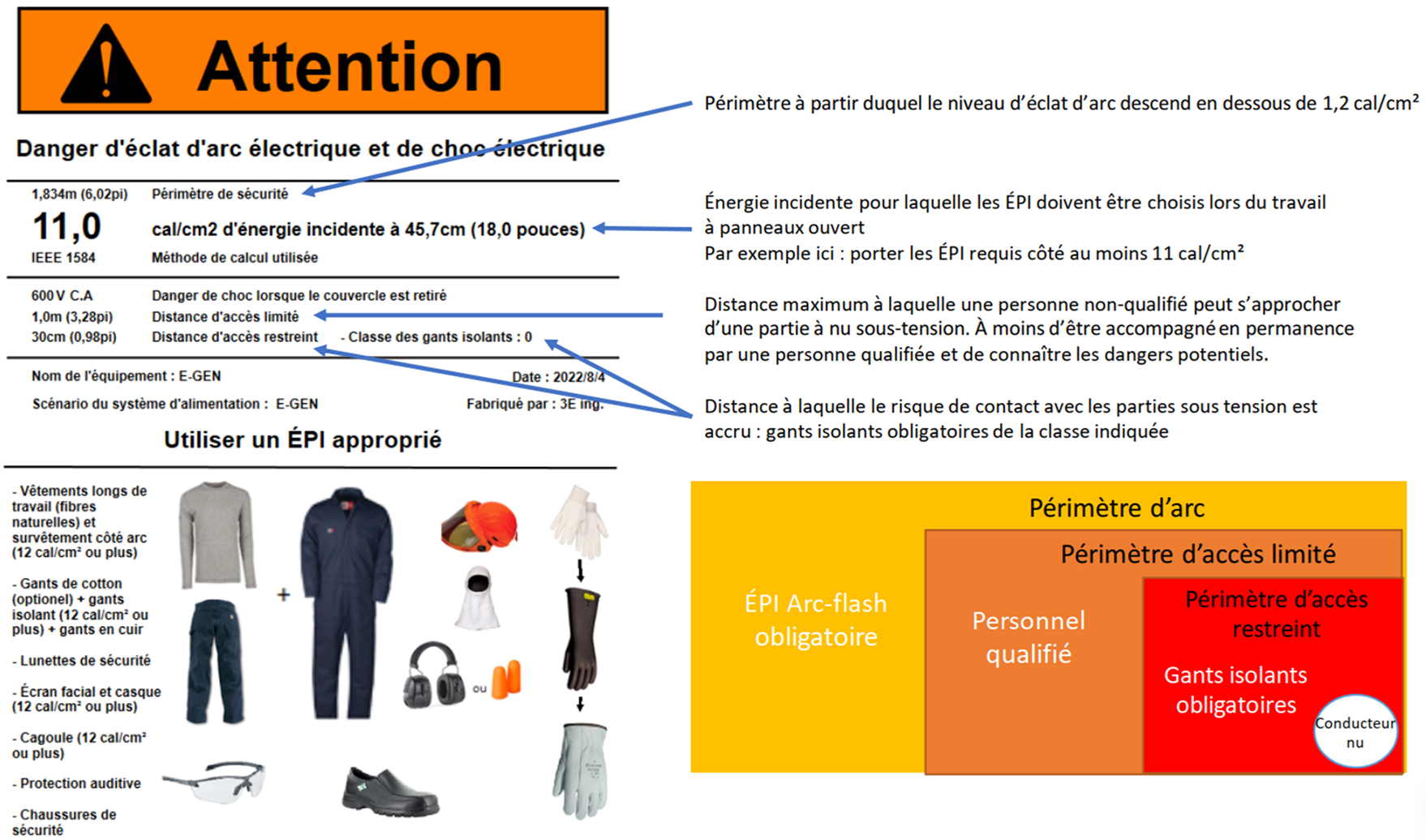
- Affix Arc Flash safety labels to electrical cabinets and panels.
- Train personnel to understand the risks and interpret the labels.
Methodology
The intervention included:
- Complete survey of the ship’s electrical network with the assistance of the crew.
- Modeling of the network using EasyPower to simulate short-circuit scenarios.
- Calculation of incident energies and determination of risk areas.
- Production of a detailed report including results and recommendations.
- Creation and installation of customized Arc Flash labels on each panel.
- Awareness training for 10 STQ staff members on the nature of electric arcs, applicable standards, lockout procedures, PPE categories, and label reading.
Key results
- Identification of several points in the network where incident energy levels exceeded critical thresholds.
- Precise definition of safe approach distance limits for each electrical cabinet.
- Installation of 100 Arc Flash labels compliant with CSA and IEEE standards.
- Increased staff awareness through interactive training covering NFPA 70E, Bill C-21, and best practices in lockout/tagout.
Recommendations
The final report enabled STQ to:
- Update its internal electrical safety procedures.
- Provide its crew with PPE adapted to the calculated energy level.
- Prevent the risk of serious injury from electric arcs.
- Comply with Canadian occupational health and safety regulations.
Expected impact
This Arc Flash study directly contributes to:
- Improving the safety of technical personnel on the ship Saaremaa.
- Reducing the risk of serious electrical accidents.
- Ensuring regulatory compliance of marine electrical installations.
- Strengthening the culture of prevention within STQ.
Conclusion
The arc flash analysis conducted by 3E Eng. on the Saaremaa ferry illustrates the importance of proactive electrical risk management in the maritime sector. By combining technical expertise, digital modeling, and staff training, the project has ensured safer operations that comply with international standards.