
The city of Mogadishu is powered by several private electricity suppliers (PES) operating on isolated networks, mainly based on diesel generators. This fragmentation leads to major inefficiencies: duplication of infrastructure, high technical losses, pollution, and high costs for consumers. In this context, the Somali Ministry of Energy and Water Resources (MoEWR), with support from the World Bank, has commissioned the consortium 3E Eng. – CPCS to prepare an integrated master plan for the transmission and distribution network.
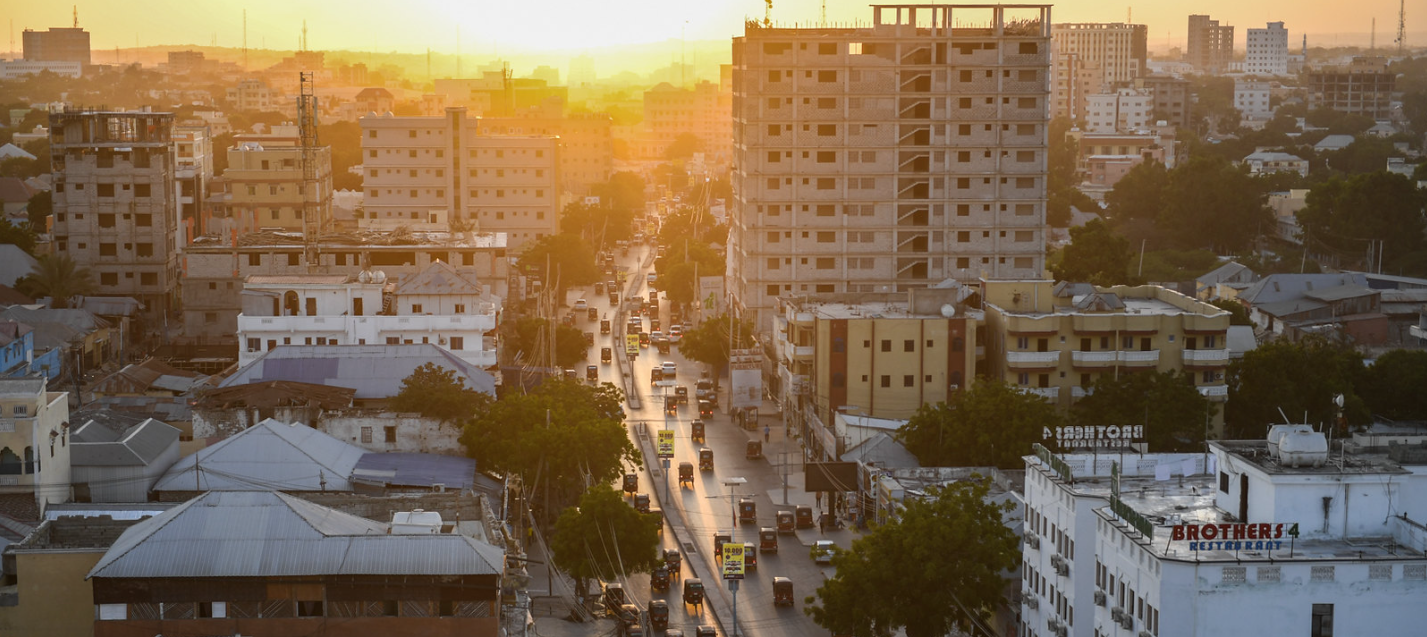
Mogadishu Network
Integrated grid development plan
- Client
- Somali Ministry of Energy and Water Resources
- Year
- 2022 - 2024
- Location
- Somalia
Context
Project objectives
- Establish an integrated transmission and distribution network plan covering Mogadishu.
- Design a 10-year investment plan based on least-cost analysis.
- Reduce technical losses and improve network reliability.
- Promote the integration of renewable energies, particularly solar photovoltaics.
- Strengthen local capacities through technical training and workshops.
Methodology
The study combined approaches involving data collection and validation, network modeling, and scenario analysis:
- Use of CYMDIST and QGIS software to model current and future networks.
- Simulation of existing networks to identify constraints (overload, losses, voltage).
- Preparation of 5-year and 10-year scenarios, including investments in 132/33 kV substations, 33 kV underground lines, conversion of 11 kV substations to 33 kV, and gradual integration of solar power plants.
- Electricity demand forecasts through 2040, with three growth scenarios (low, medium, high).
Key results
- Projected demand: strong growth in planned electricity demand between now and 2040.
- 5-year plan: construction of new 132/33 kV substations, new 33 kV feeders, conversion of 11 kV substations, and addition of new 33/11 kV substations.
- 10-year plan: addition of a fourth 132/33 kV substation, new 33 kV feeders, and addition of MV/LV stations to support demand growth.
- Expected reduction in technical losses to less than 2% of the total, thanks to the optimization of the network configuration, cables, and substations.
- Integration of hybrid power plants (diesel + solar + batteries), promoting the energy transition.
Expected impact
- Improved reliability: unified network capable of operating in N-1 mode.
- Cost reduction: less duplication, optimized production and distribution.
- Energy transition: better integration of solar power and reduced emissions.
- Enhanced capacity: skills transfer through training and workshops.
Conclusion
This project marks a decisive step forward for the electricity sector in Somalia. The integrated network plan for Mogadishu offers a clear and realistic vision for the next 10 years, enabling improved reliability, reduced losses, and preparation for the integration of renewable energies. It provides a solid foundation for a future interconnected and sustainable network.